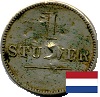
The Turkish Lira; Lira means 'Pound'? I guess it must be related to the Latin 'libra' where the pound symbol (£) came from. Does the same apply to the Italian/Vatican/San Marinese Liras?
Maybe Lire is kinda like Italian for French 'Livre' as well, as in 'livre sterling' (Pound Sterling). Would make sense, no?
Also i don't know if there is a shortcut for the Franc symbol... I don't think there is, given how the Franc went out of circulation at the same time personal computers became common.
According to Wikipedia, in a page that seems to be reliable, the Turkish Lira goes back to the same Roman libra as the other European and Asian currencies of that name. And yes, it includes the French «livre», the Italian «lira/lire», etc.
As for the ₣ symbol, lolowashere on the French side points out that it was (to be) introduced in 1988, but that it failed since the Minitel makers and other "computer-like" machine makers refused to add it on their keyboards.
Interesting infographic. I'm assuming they mean by population?
Lira, livre, and Libra do indeed have the same roots. Although the name was used in practice for ages beforehand, the French picked up the word "livre" for their currency officially in 1549, "livre" being the word for "pound" in both the context for weight and currency (distinguished from the word for "book" by a feminine pronoun). The Italians began using the word "lira" in the 1610s. "Libra" comes from the Proto-Italic "Leithre" meaning "pound".
Which may all be linked to the coinage used in Sicily and other Greek colonies in ancient times called "litra", which was the word used for both the small silver coinage and the weight it represented when applied to other metals.
Citeer: "SquareRootLolly"Also, forgive me for my foolishness, but how is GUILDER related to Polish Zloty and Hungarian Forint?
Thanks,
SRL
They are all derived from the Fiorino d'Oro (Golden Florin) from Florence, Italy. In Dutch this became 'Gulden Florijn' and hence the 'f' or 'fl' symbol was used for it until the Euro replaced it. The Forint has obviously the same root. And in Polish Zloty is the word for 'Golden'.
Citeer: "SquareRootLolly"Also, forgive me for my foolishness, but how is GUILDER related to Polish Zloty and Hungarian Forint?
Thanks,
SRL
Guilder (gulden) and złoty both derive from the word for 'gold' in the respective languages.
Forint, Florin or Florijn (a name used for the Dutch gulden) derives from the name of the city of Firenze/Florence, where golden coins were minted which served as a kind of standard for some time. https://en.wikipedia.org/wiki/Florin_(Italian_coin)
But just like you, I wouldn't directly sweep those two on the same heap.
Citeer: "pnightingale"Thanks, I love things like this.
So no connection between Rial/Riyal and the Spanish Real then?
I'd argue that there is. The Spanish "Real" comes from the Latin "Regalis", which comes from the Proto-Indo-European root "reg-". "Reg-" means "to direct in a straight line" and "to rule", so I say that it's also very probably the root of the Persian word "rahst", which means "right" or "correct".
I had never thought of it, but yes, there is a connection:
I suppose it's not in the map because none of the western currencies survives today.
In Arabic, the word looks foreign, and it is actually listed alphabetically in dictionaries, not according to a "root" (which it doesn't have anyway). Note that it can be used for the Maria Theresa Thalers ("riyal Maria Theresa"), so it can mean "silver coin" more generally rather than being a unit similar to the Spanish Real.
Riyal is actually related to the 8 Reales coins of the Spanish Empire that were used all over the Americas and East Asia. These coins were mostly known as Spanish Dollars in the English-speaking world (and so the US and Hong Kong Dollars got their names) and Pesos in the Spanish-speaking world.
In the Middle East people used both Maria Theresa Thalers and Spanish Dollars. The Spanish Dollars had a 10% higher silver content, so this could be the reason why their name ( 8 Reales) was preferred for their own currencies.